Oil out, biomass in
Our part
in this
project
The task
The requirements:
- Reduction of heating costs
- Independence from fossil fuels
- Fail-safe heat supply for 1,000 m²
- Space-saving solution, implementation without major conversion
Our solution
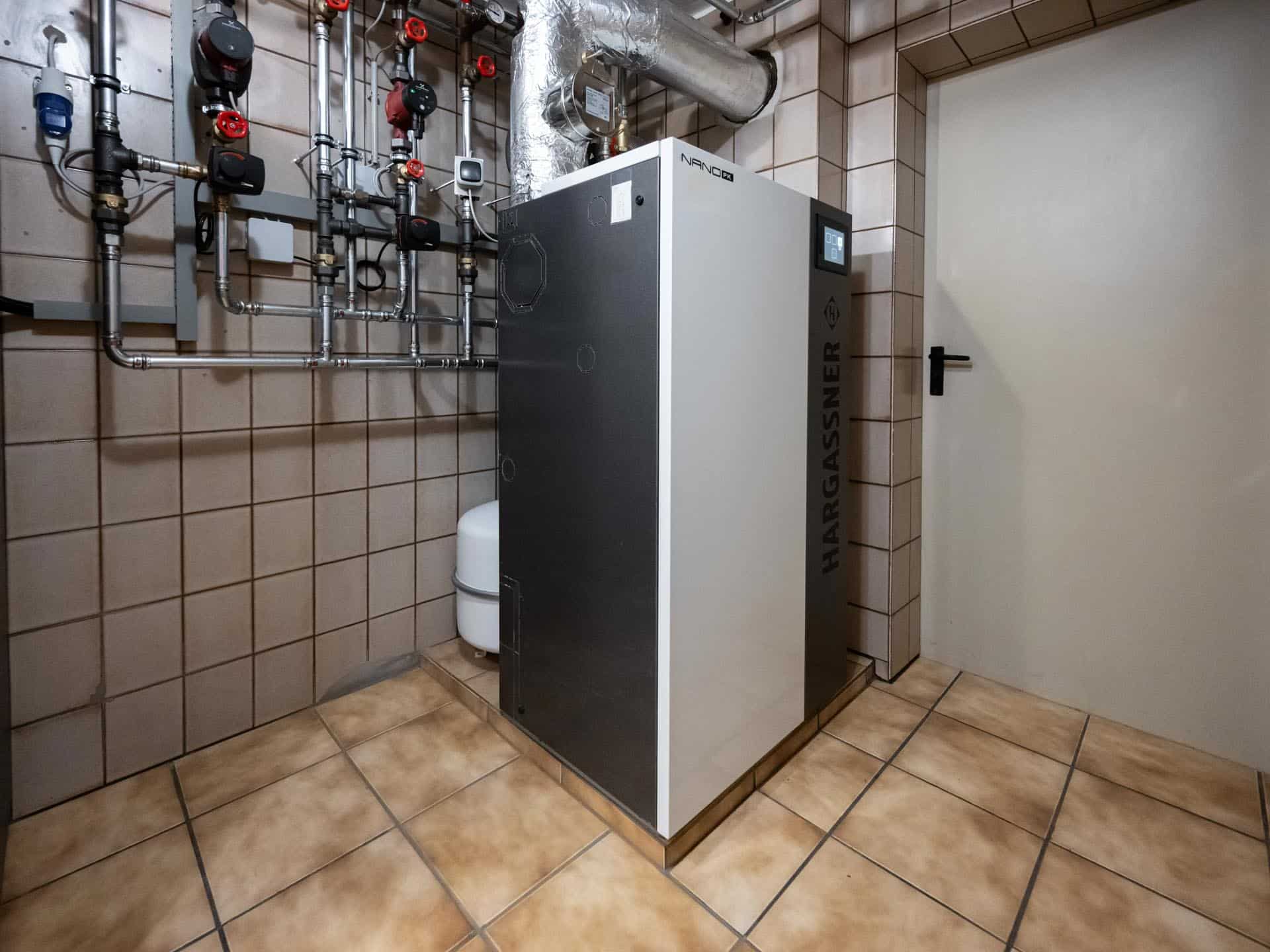
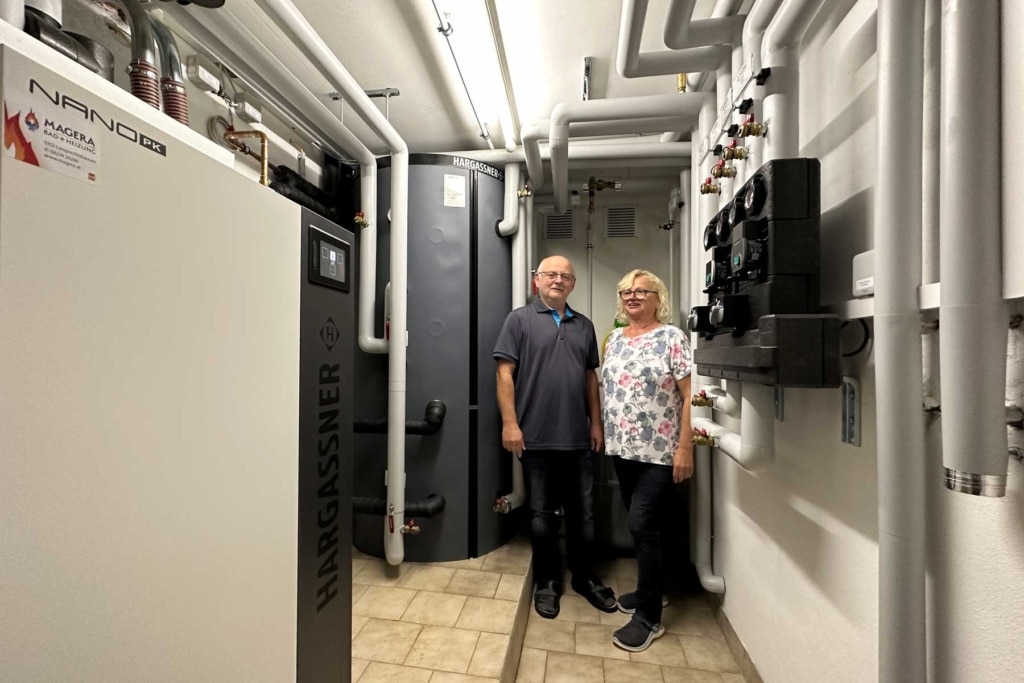
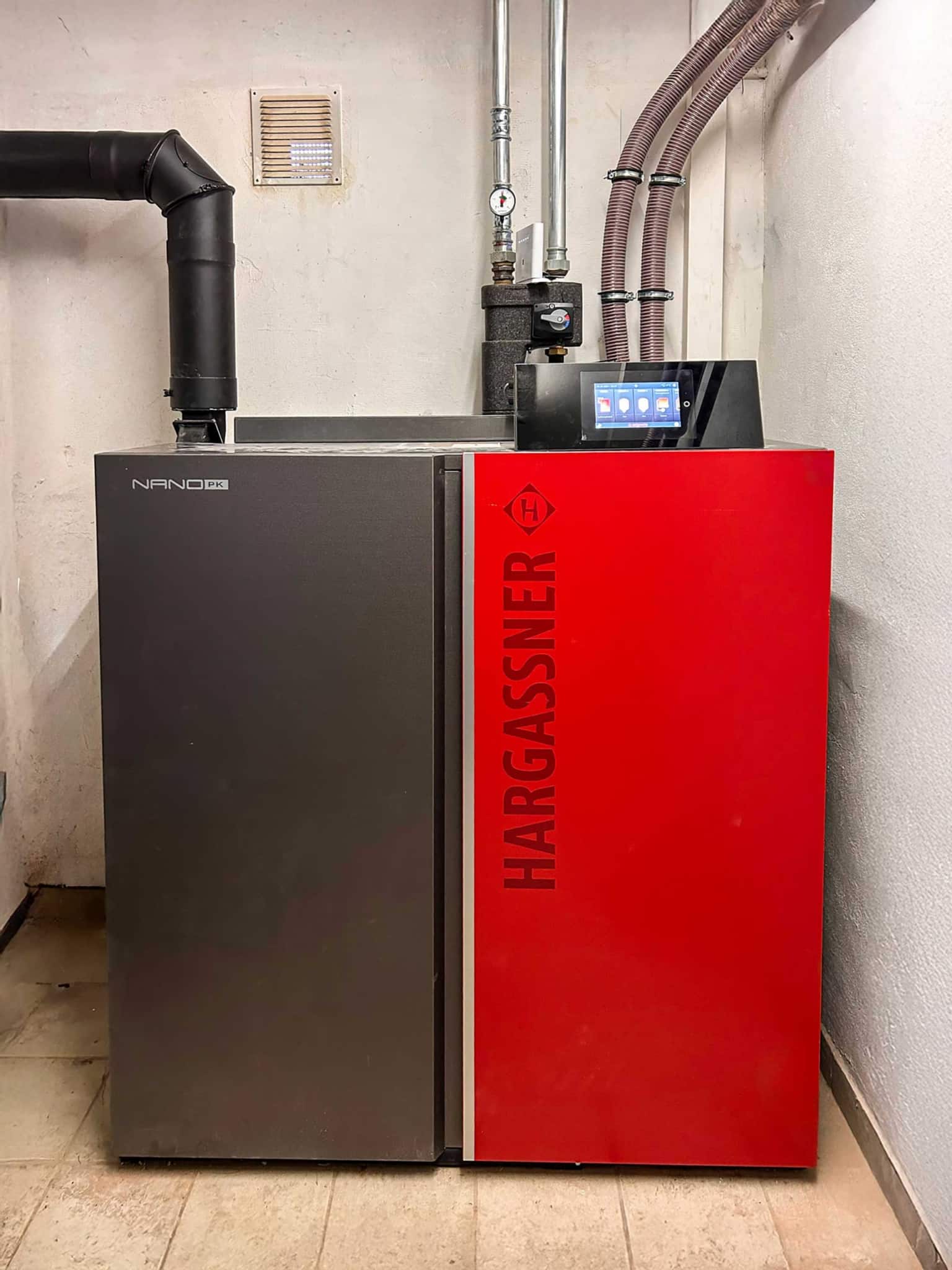
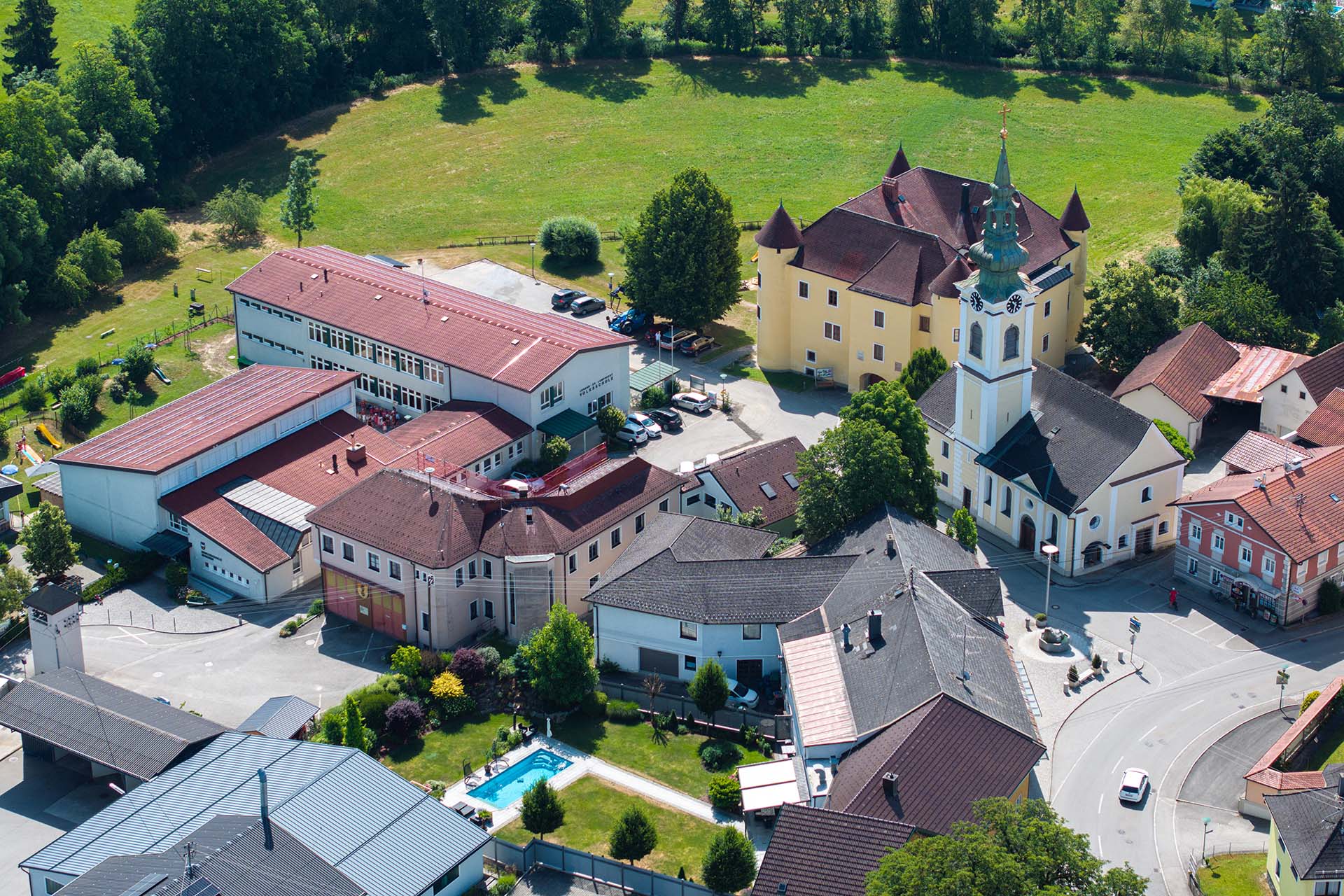
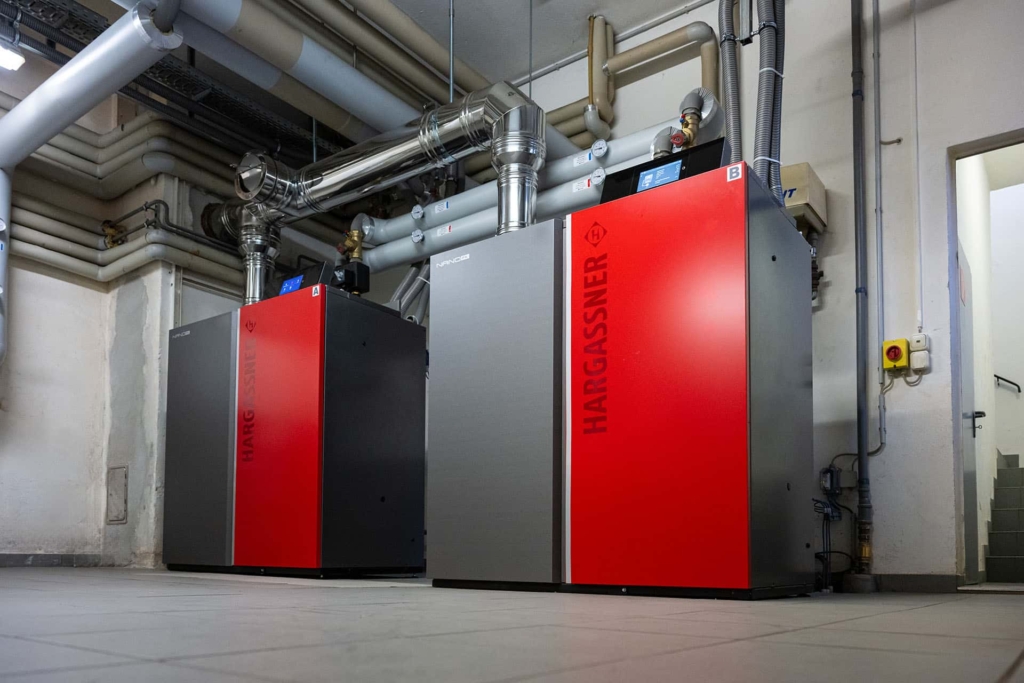
The municipality of Sigharting (Upper Austria) is now supplied with heat from regional wood pellets with the “large” Nano-PK 65 in cascade:
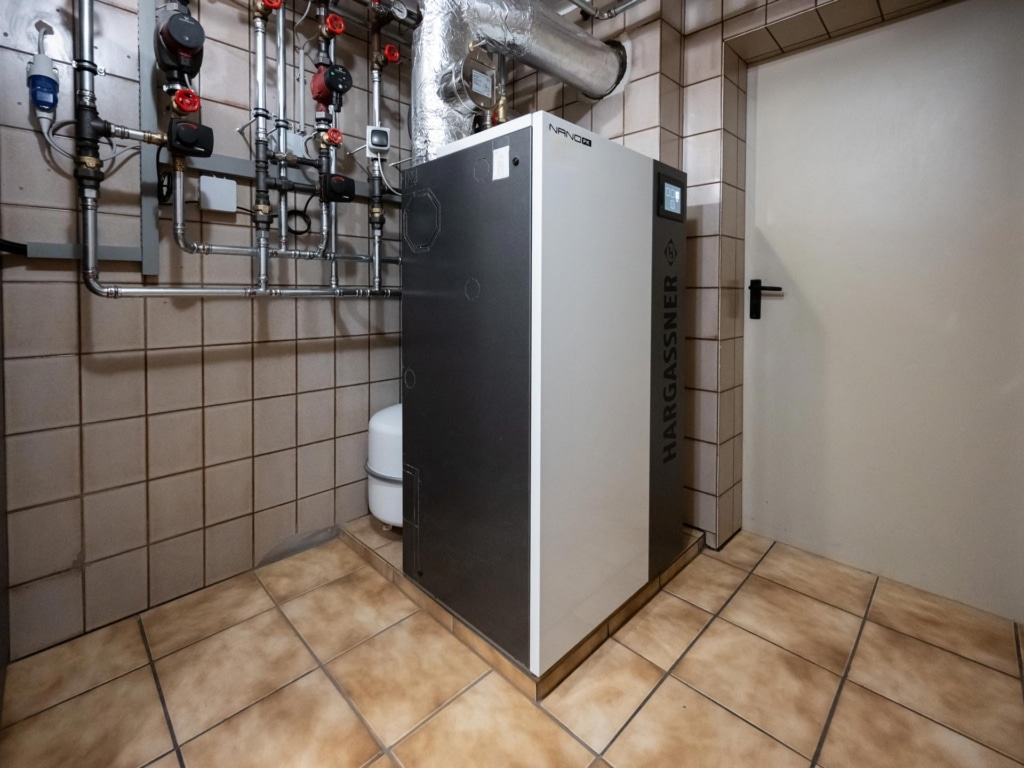
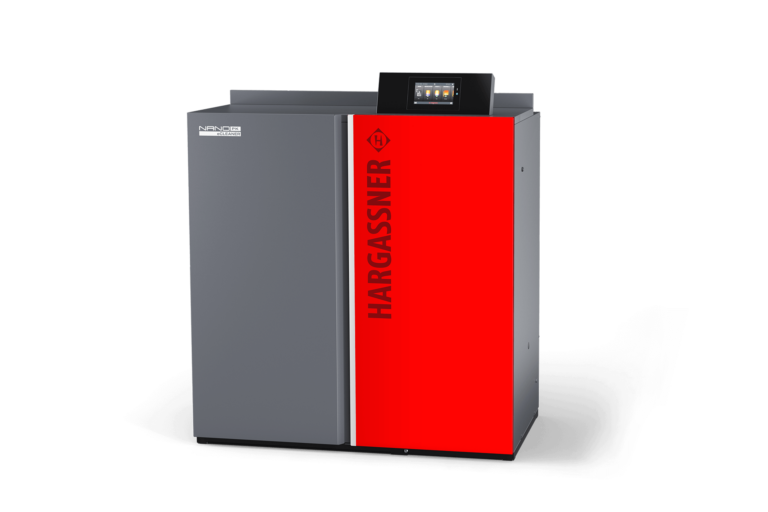
- 2 x Nano-PK 65 kW pellet boiler in cascade connection
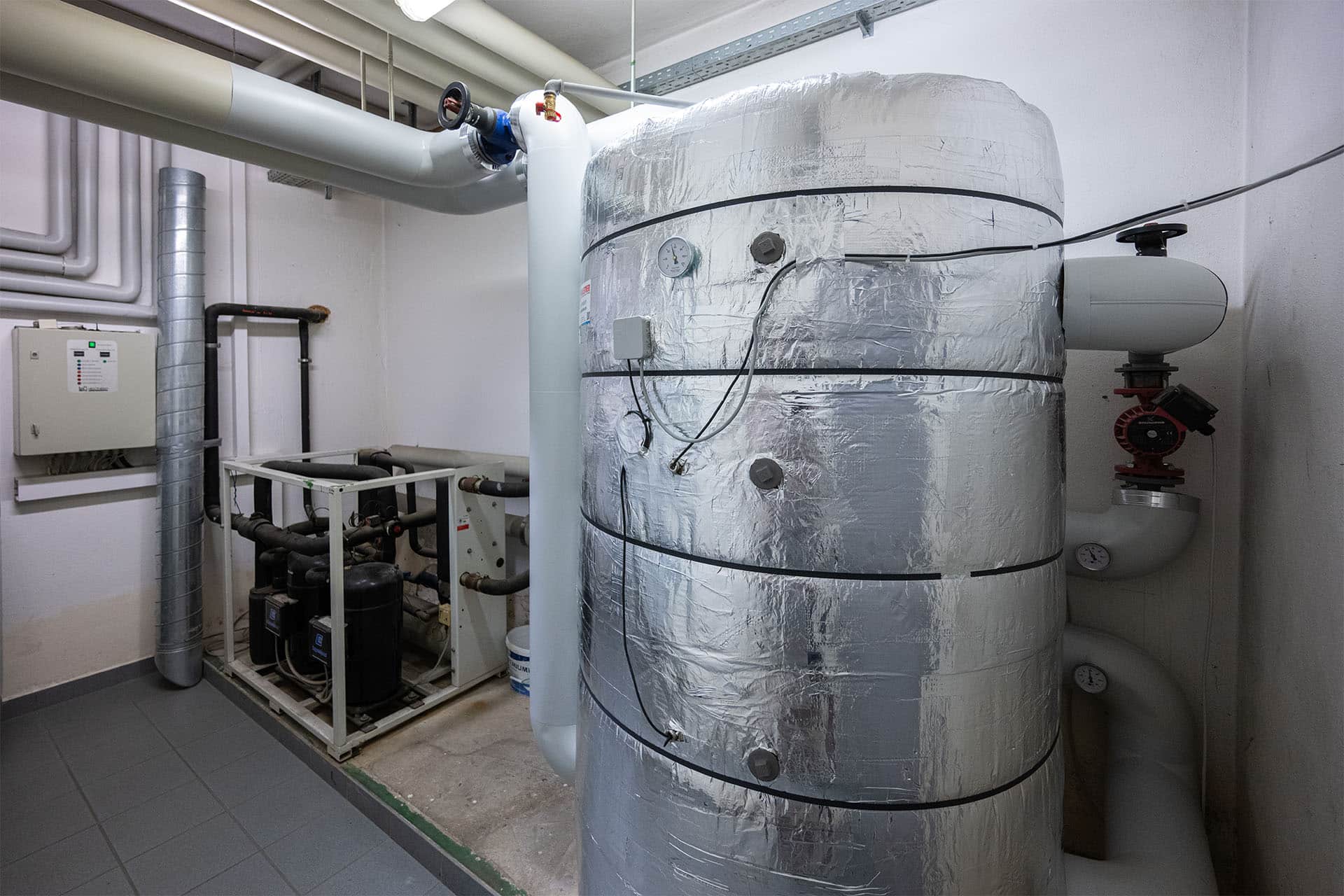
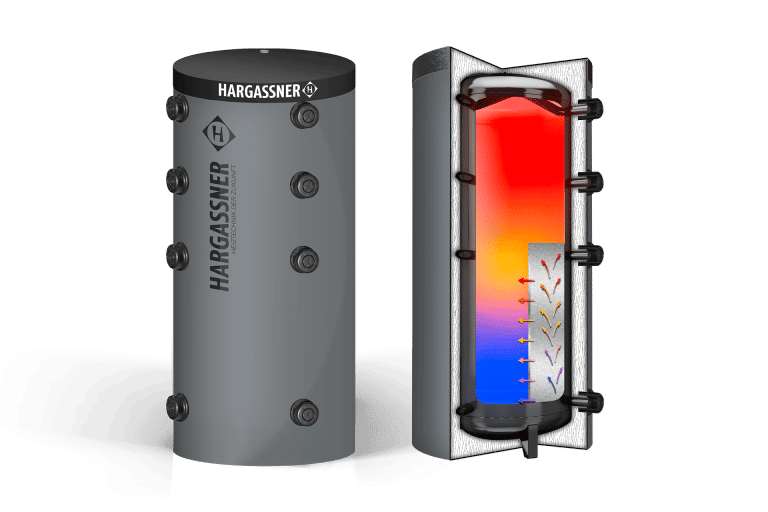
- 1 x accumulator tank
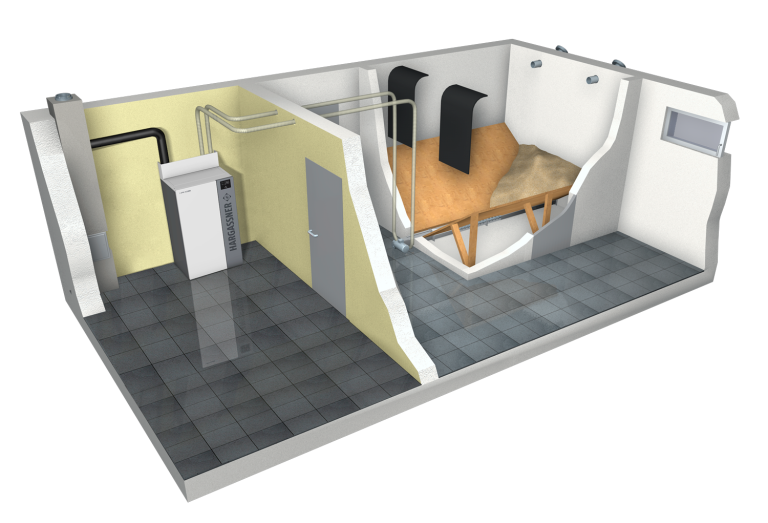
- Conversion of the oil storage room to pellet storage
- Automatic fuel feed with screw chamber discharge
It’s not just private homeowners who need to monitor their energy costs; public institutions and local authorities must also control and reduce theirs. For this reason, the municipality of Sigharting (Upper Austria) has decided to adopt a new approach to heating – switching from oil to biomass. In doing so, Sigharting also wants to set an example.
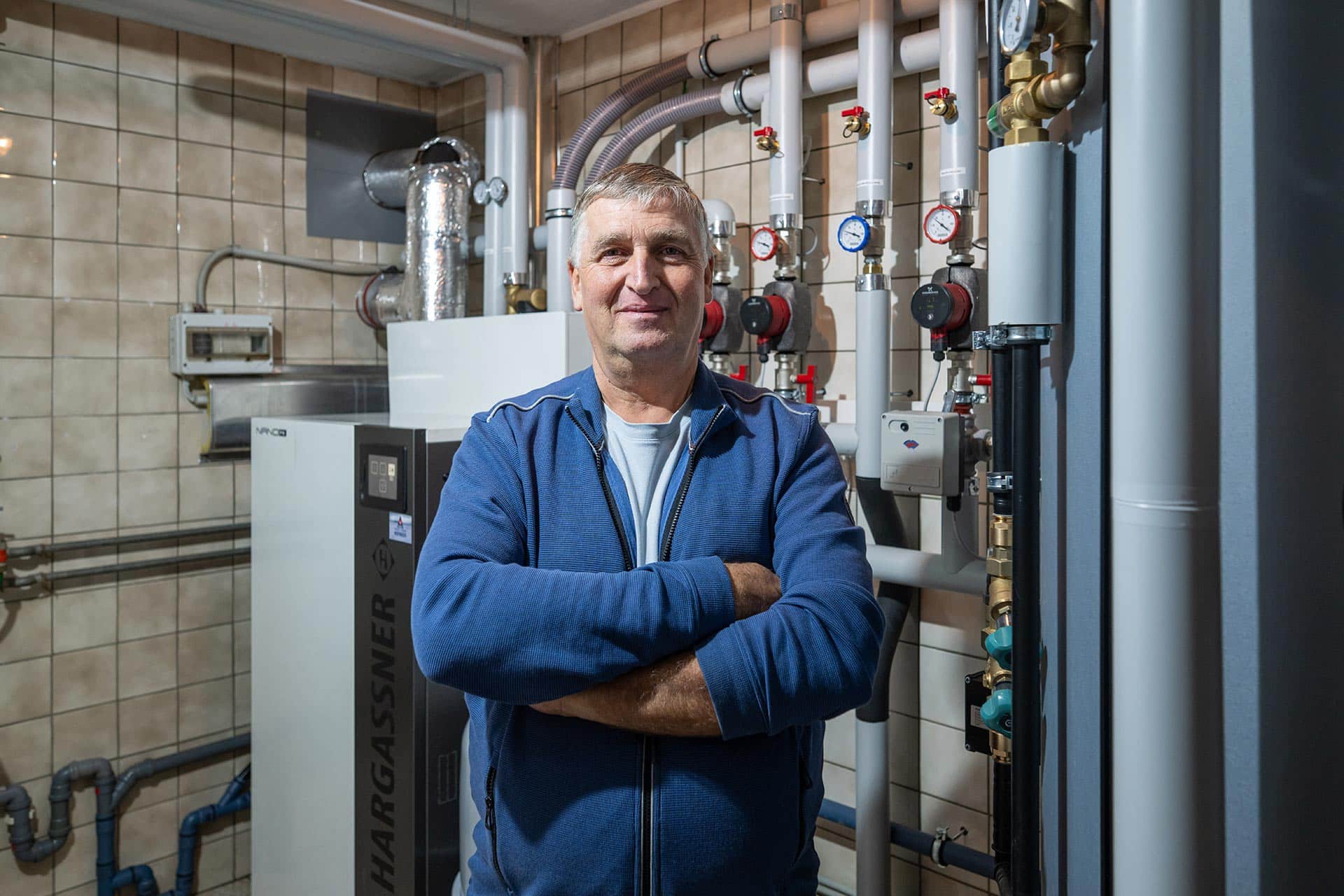
With a total output of 130 kW, the municipal office, fire station, primary school, and multi-purpose hall are now supplied with thermal energy. That’s around 1,000 m² of total area, which is now supplied by two Hargassner Nano-PK 65. They are connected in a cascade, ensuring reliable coverage even during peak demand periods. Space restrictions in the existing boiler room required two individual boilers, installed in a cascade connection. One advantage of this planning: as one boiler takes over the basic supply and the second system cushions the peak loads, failure is also reliably prevented.
The existing oil tank room was adapted relatively simply, fitted with a sloping floor and now serves as a pellet storage system. Each boiler is supplied with its own screw conveyor discharge for the necessary filling of the boilers. A ventilation and light shaft was equipped with corresponding supply lines so that the storage room could also be filled. This meant that no major structural measures were necessary for the conversion, which was also a key requirement during the planning stage.
2 x Nano-PK 65 kW
Energy costs cut by half
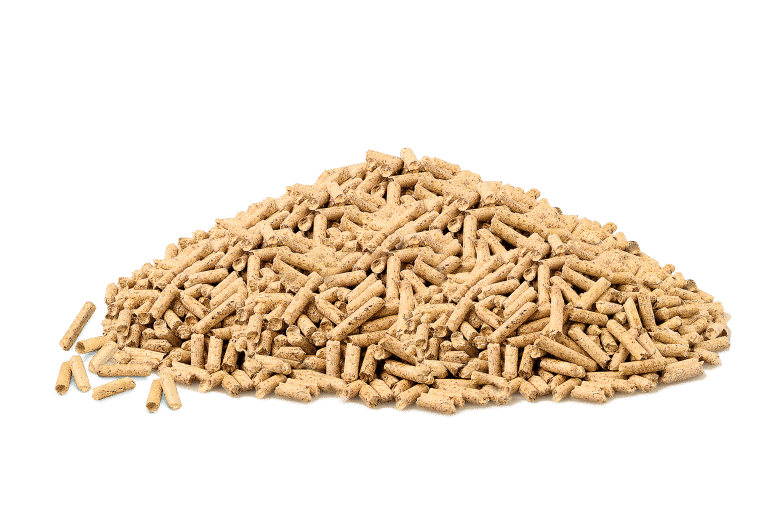
While the oil consumption was around 15,000 litres per heating period, the running costs fell by around 50 % with the switch to the new concept. And that with a consumption of approx. 30,000 kg of pellets per year. This already includes the hot water heating, which is also provided by the system. Watch the video to learn more!




Used products
Find out all the details about the products used in this project and get a better overview of Hargassner heating systems.


More references
Find out which products are used in similar situations and gain a better insight into the world of Hargassner.